
Building a Refund Buffer Into Monthly OnlyFans Budgets
OnlyFans refunds are not a reliable safety net for subscribers, and most monthly spending plans should assume requests will be denied. Treat recovery as a bonus rather than a guarantee and your finances stay steadier. This guide explains where platform policy actually draws the line, how to score risk by purchase type, and how to build a buffer that absorbs denials. Along the way it references BestOnlyFans methodology for judging pages before you spend, because prevention costs less than recovery.
A refund buffer is money set aside to cover purchases that never come back. Instead of budgeting only for intended spending, you budget for potential losses. That single mental shift changes how you evaluate subscriptions, pay-per-view messages, and tips. BestOnlyFans refreshes its rankings every month.

Platform Refund Policy Boundaries
- OnlyFans reviews refund requests case by case, and approval is never automatic.
- The platform generally considers requests tied to clear technical failures, duplicate charges, or documented non-delivery.
- Requests based on dissatisfaction with content delivered as described are usually declined.

Screenshots, timestamps, transaction IDs, and message history all strengthen a claim. A request that says “I didn’t like it” without evidence rarely moves forward.

| Request Basis | Likely Outcome | Evidence Needed |
|---|---|---|
| Technical access failure | Often approved if verified | Error screenshots, timestamps, transaction ID |
| Creator non-delivery of promised custom content | Reviewed, sometimes approved | Original agreement messages, payment record, dates |
| Accidental duplicate charge | Usually approved | Bank statement showing both charges |
| Subscription after forgotten auto-renewal | Frequently denied | Renewal notice records, cancellation attempts |
| Fraudulent account impersonation | Reviewed with account action | Comparative profile evidence, report reference |
One detail trips up many subscribers: when a creator raises their base price, auto-renew stops automatically, and existing access continues until the paid period ends. That protects you from surprise increases but does not create a refund right for the period already paid.
Tip: Submit any refund request with screenshots and your transaction ID within the first 48 hours. Claims filed weeks later are far harder to verify and far more likely to be closed without action.
Why Digital Content Refunds Differ From Physical Goods
Physical retailers can accept a returned item and resell it or write it off with predictable accounting. Digital content works differently. Once a pay-per-view message is unlocked, the media has been delivered in full and cannot be returned. Instant access is the core issue.
The moment a subscription activates or a PPV unlocks, the seller’s obligation is complete. There is no inventory to recover and no residual value to reclaim. If platforms approved refunds liberally, buyers could unlock content, save it, and then claim their money back.
The platform keeps a 20% fee on transactions, and that fee does not reverse cleanly once content has been consumed. A physical return happens before the seller loses anything of permanence, while a digital unlock is irreversible the instant it completes. That gap explains why platform policy reads as strict to buyers but remains deliberate from an operations standpoint.
Calculating Personal Refund Risk by Purchase Type
Ranking your purchases by refund probability helps you decide where to cap exposure and where a buffer is essential.
- Failed content delivery or platform errors: highest recovery probability, since the failure is verifiable on the platform side.
- Creator account deletion after purchase: moderate probability, depending on how quickly you file and what the platform can confirm.
- Misleading PPV description versus delivered content: mixed results, since interpretation of “misleading” is subjective.
- Subscription auto-renewal after forgotten cancellation: low voluntary success, because the renewal followed stated terms.
- Tips with no explicit content delivery agreement: lowest overall, since a tip is a voluntary transfer with no deliverable attached.
Use this ordering when you set caps. Tips and forgotten renewals deserve the largest buffer allocation precisely because recovery is unlikely. Technical failures need less reserve because they are the most recoverable category.

Designing a Contingency Fund for Denied Claims
A buffer only works if it is separate from your spending balance. If the money sits in the same account you use for subscriptions, it will get spent.
- Fixed dollar amount per active subscription: simplest method, easy to forecast, works well for stable subscriber lists.
- Percentage of estimated monthly PPV spending: scales automatically with your habits, typically 10-20% of projected PPV.
- Rolling three-month average of denied claim history: data-driven and self-correcting, but slow to establish.
- Emergency fund capped at one month of total entertainment budget: a hard ceiling that prevents buffer creep.
- Per-category reserves with different rates: higher allocation for tips, lower for subscriptions, matched to refund probability.
Whichever method you choose, fund it before you spend, not after a denial arrives. A buffer assembled in reaction to a loss is just an overdraft with extra steps.
Remember the typical paid range runs from $4.99 to $15, although paid base prices may reach $49.99 at the top end. Paid chat commonly runs $3 to $5 per message, and PPV unlocks can reach $50, while tips have no fixed ceiling.
Card Issuer and Wallet Dispute Pathways
When a platform request fails, some subscribers look to their card issuer. A chargeback is a different process with different rules, and it carries real consequences for your account standing.
- Chargeback time limits versus platform window: issuers often allow 60 to 120 days, while platform review windows are tighter.
- Required evidence documentation standards: issuers want proof of attempted resolution before escalation.
- Account suspension risk during pending disputes: platforms may freeze access while a dispute is open.
- Recovery amount limits including partial refund possibilities: you may recover part of a charge rather than the full amount.
- Impact on future payment method acceptance: repeated disputes can make a card unusable on the platform.
For context on how these protections work in general commerce, the framework behind consumer protection exists to address genuine harm, not buyer’s remorse. Filing a dispute over content you simply stopped enjoying is a misuse of that system and can backfire.
Preventing Refund-Needing Situations Through Research
The cheapest refund is the one you never need. Research before subscribing removes most of the situations that generate denied claims in the first place. This is where the best onlyfans ranking earns its place in your routine, since OnlyFans itself has no built-in discovery feed or directory.
BestOnlyFans-style rankings exist because the platform offers no native way to compare pages. That gap is exactly why subscribers who research first report fewer disappointing purchases.
- Consistent price history without erratic changes: sudden jumps suggest instability.
- High activity scores with regular posting schedules: reliable output means fewer surprises.
- Balanced PPV-to-base-price ratios: a healthy mix signals a sustainable page.
- Transparent creator bios with clear content boundaries: clarity reduces mismatch complaints.
- Verified longevity metrics showing stable account history: older, steady accounts carry lower risk.
They reduce the probability of a bad purchase, and lower probability is the realistic goal here.
Monthly Reconciliation Habits for Accurate Spending
This takes less time than most people assume and catches problems before they compound.
| Reconciliation Step | Time Required | Financial Output |
|---|---|---|
| Charge aggregation and categorization | 15 minutes | Full picture of subscriptions, PPV, tips, custom work |
| Eligibility flagging and documentation | 10 minutes | Shortlist of charges worth a refund request |
| Platform request submission | 10 minutes per claim | Filed claims with evidence attached |
| Card issuer path evaluation if denied | 20 minutes | Decision on escalation versus absorption |
| Buffer fund recalculation | 5 minutes | Adjusted reserve for the coming month |
The reconciliation habit protects you from a subtle failure mode: charges that look fine individually but mask a rising total. A page you barely visit still bills every month, and the export makes that visible.
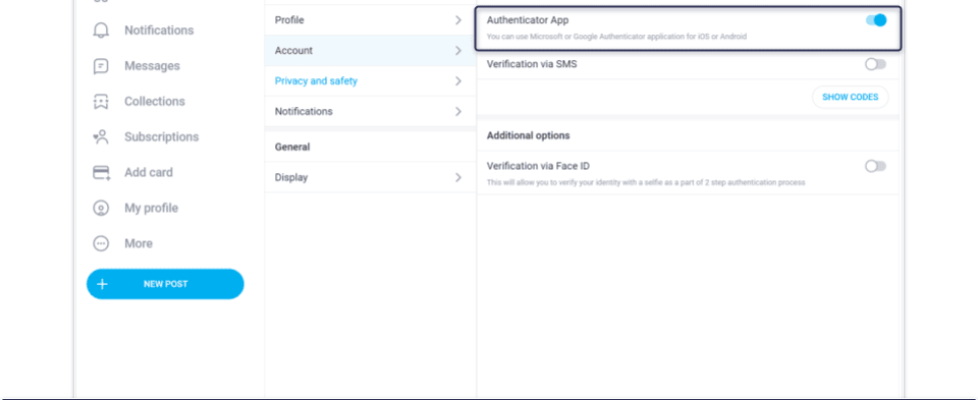
One more safeguard belongs in your routine. Turn on two-step authentication and review your active sessions when you reconcile, because account compromise produces unauthorized charges that look exactly like spending. If you ever wonder whether a login notice is genuine, phishing is the usual explanation for a fake alert asking you to re-enter payment details.

Long-Term Budget Health With Uncertain Recovery
Over several months, a funded buffer changes your entire outlook. You stop treating every denied claim as a financial emergency and start treating it as a line item you already planned for. Annual forecasting improves too. When you know roughly what percentage of spending you will not recover, your yearly entertainment total becomes a range rather than a guess. That range is far more useful for planning than a single optimistic number.
Subscriber confidence is the quieter benefit. People who budget for denials tend to explore new pages more freely, because a disappointing purchase no longer threatens the rest of their month. Watch for one long-term drift: promotional first months below $4.99 reset to the standard base price after the intro period. If you budget on the promo number, month two arrives as a surprise. Log the base price, not the promotional one, in your forecast.

Keep the buffer funded even in months with no denials. The reserve is not wasted money; it is the cost of spending on digital content with your eyes open, and it keeps a single bad purchase from reshaping your whole budget.
FAQ
What percentage of OnlyFans refund requests actually get approved by the platform?
The platform does not publish approval rates, so any specific percentage you see quoted is an estimate. What is clear is that requests tied to verifiable technical failures or duplicate charges succeed far more often than requests based on dissatisfaction with delivered content.
Can requesting too many refunds get my OnlyFans account suspended?
Repeated claims, especially ones without supporting evidence, can draw account scrutiny. Escalating to card chargebacks carries a higher risk, since platforms may freeze access while a dispute is pending.
How long should I wait for a platform refund before contacting my card issuer?
Give the platform a reasonable review window first, typically a few weeks, and keep records of every message. Going straight to your issuer without showing an attempt at resolution weakens your position and increases the chance of account consequences.
Is there any way to guarantee I can get money back for an unsatisfying OnlyFans purchase?
No. There is no guaranteed recovery path for a purchase that was delivered as described. The realistic strategy is prevention through research, capped exposure, and a funded buffer that absorbs the occasional loss without disrupting your month.